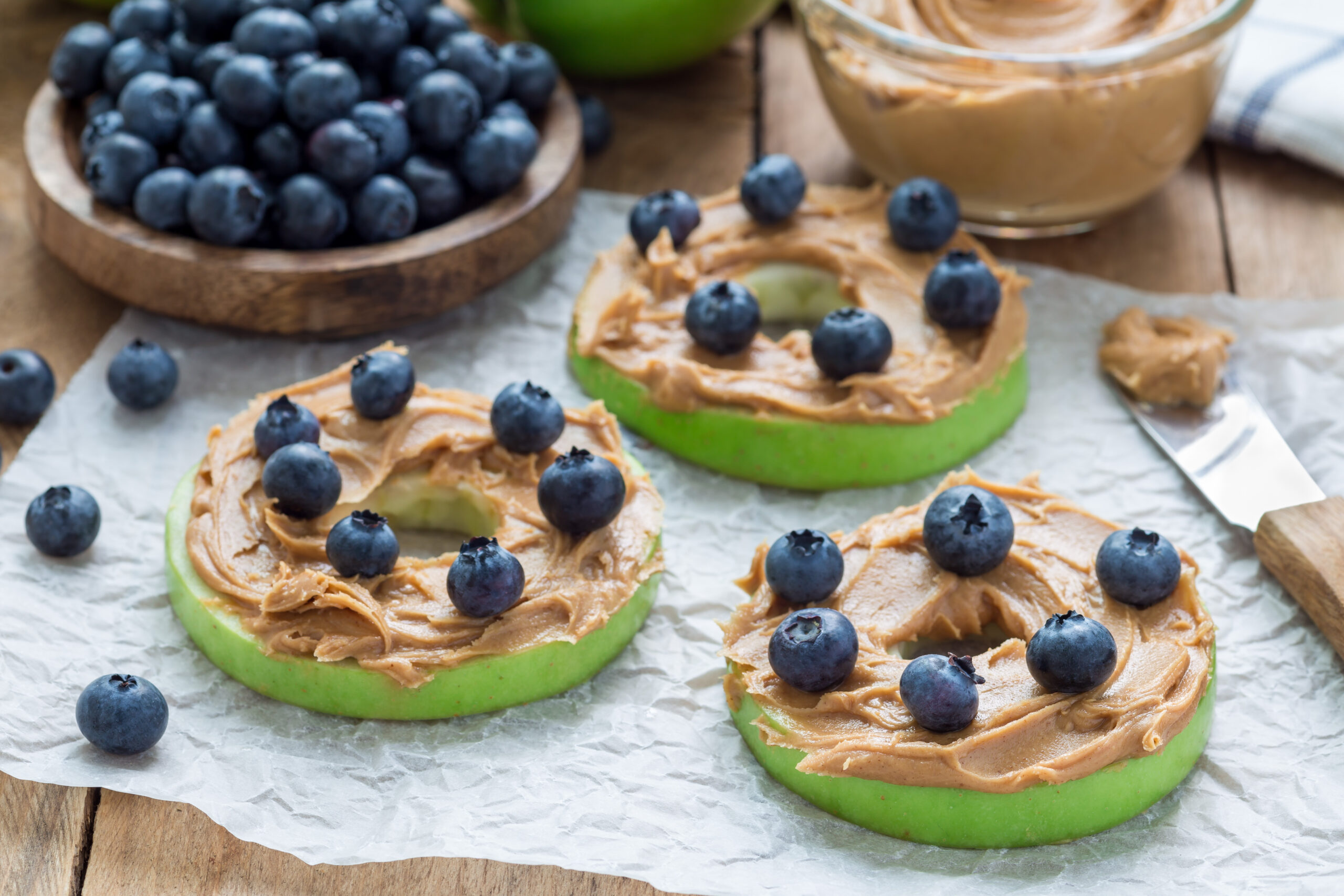
How to Build a Healthy Snack for Your Child
“I’m hungry!” If you’re a parent, you probably hear this a dozen times a day. You see the pantry doors swing open and wonder: are they just bored, or do…

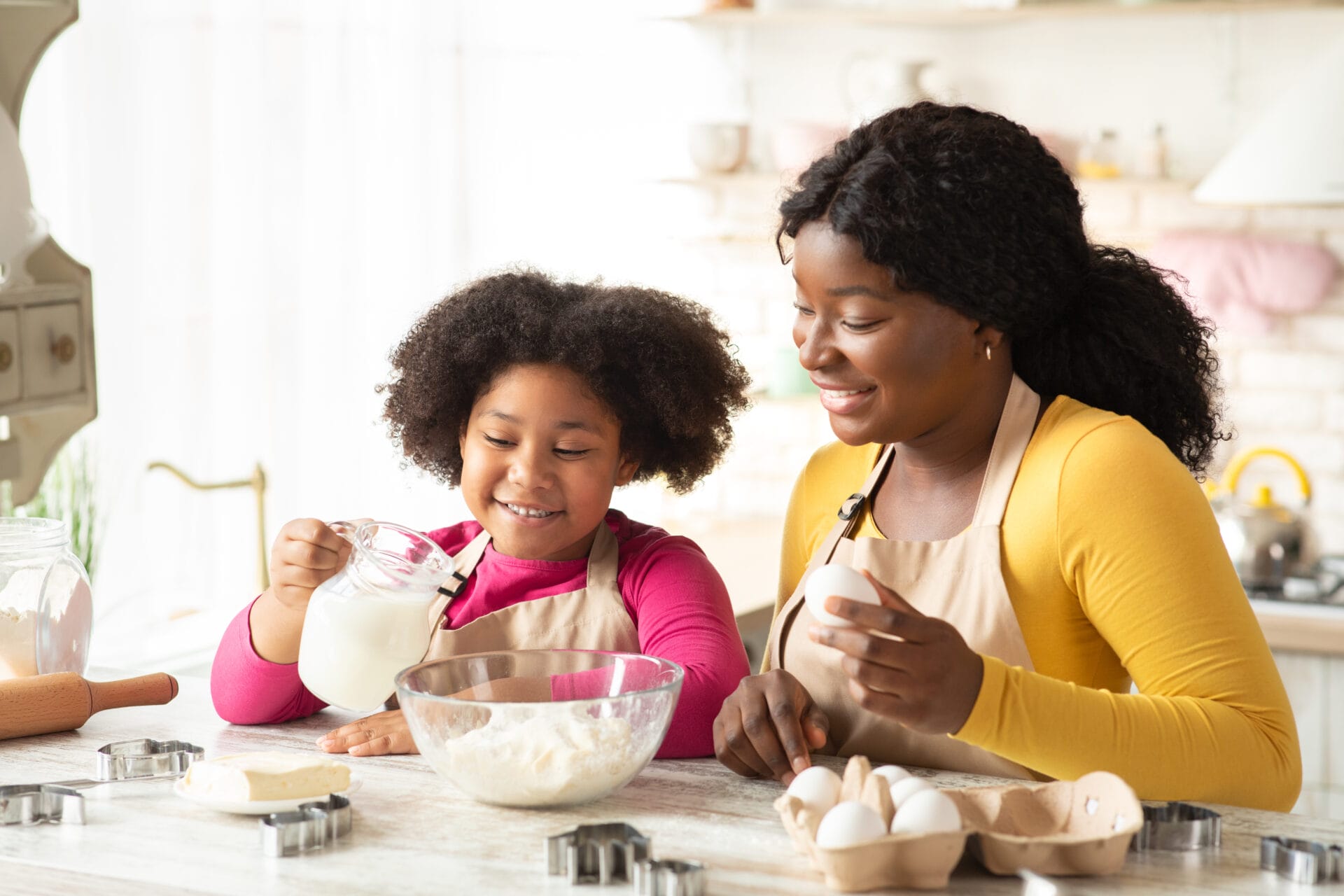
I still remember the flour cloud that erupted the first time my toddler insisted on stirring the cake batter. Cooking with kids can be messy. But it was that chaotic moment that sparked a love for cooking with my kids that’s still growing today as they get older. As a pediatric dietitian, I’ve seen it time and again: inviting kids into the kitchen is about so much more than just making muffins from a box or getting food on the table. It’s a powerful recipe for building skills, confidence, and healthy habits that last a lifetime.
Let’s explore ten top benefits of cooking with kids in the kitchen – and how cooking with kids is a game-changer for tackling picky eating, building strong family bonds, and raising capable, confident kids.
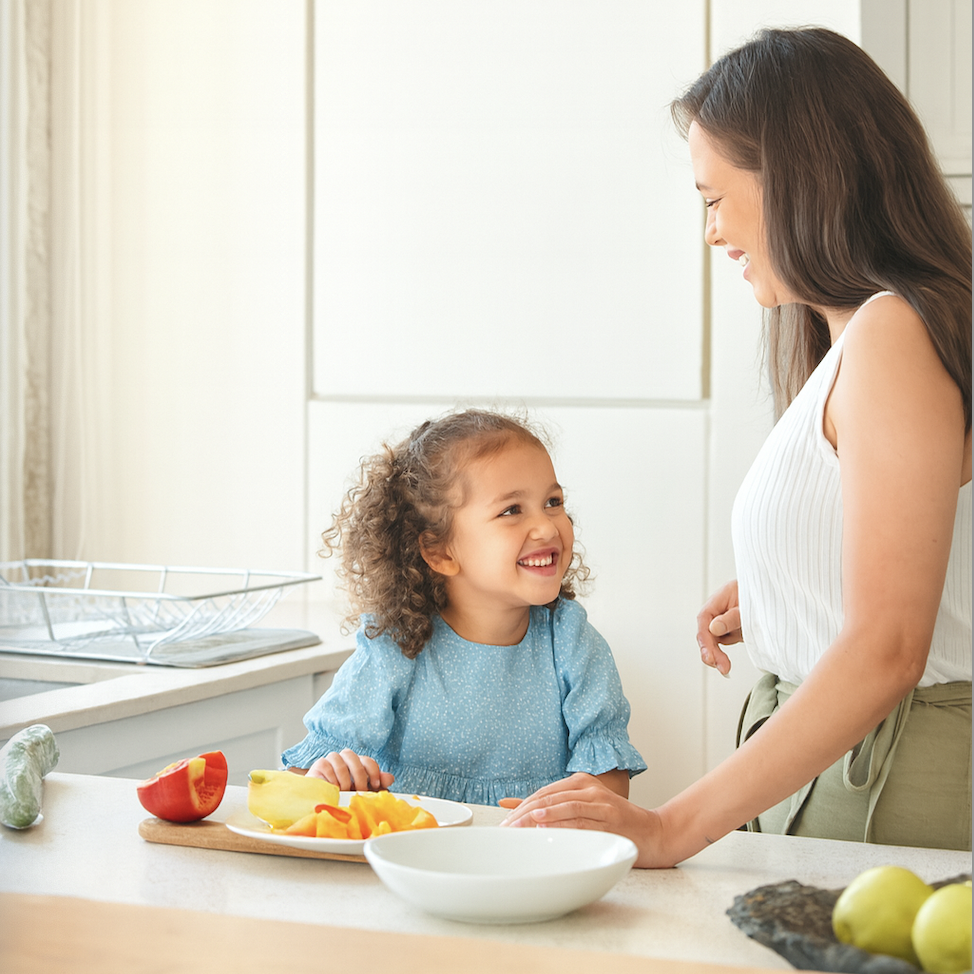
The kitchen is the heart of the home, making it a natural place for connection. Cooking together provides dedicated screen-free time to talk, laugh, and work as a team. These moments, whether you’re flipping pancakes on a Saturday morning or just washing vegetables for dinner, become cherished memories that strengthen your family bond.
Think of the kitchen as a fun, hands-on classroom. Measuring flour, cracking eggs, and following a recipe seamlessly blend academics with practical skills. Your child learns to:
This is one of the most powerful benefits: kids who cook are more likely to try the food they prepare. Research from the Academy of Nutrition and Dietetics shows that children involved in meal prep are more open to tasting new foods, including fruits and vegetables. This hands-on exposure makes them feel invested and curious about the meal.
If you have a picky eater, the kitchen can be your greatest tool. Involving your child in the process reduces mealtime anxiety and power struggles. When kids help choose ingredients at the store or wash the lettuce for a salad, they gain a sense of ownership that makes them far more willing to taste the final product. For more strategies, resources like Yummy Toddler Food offer fantastic, low-pressure ideas.
Cooking is a delicious art form. Encourage your child to invent a new smoothie blend, arrange fruit into a colorful pattern, or turn a sandwich into a silly face. This kind of creative play helps kids develop problem-solving skills and builds confidence in their own ideas.
There’s nothing like the pride a child feels after making something “all by myself.” Whether it’s stirring batter or assembling their own wrap, these small successes build self-esteem. Over time, this “I can do it!” attitude will extend far beyond the kitchen.
Pouring, stirring, sprinkling, and peeling are fantastic for developing fine motor skills and hand-eye coordination. These are the same foundational skills needed for writing, drawing, and buttoning a coat.
Why do eggs get firm when they cook? What happens when you mix oil and vinegar? The kitchen is a living science lab. Concepts like fractions, temperature, and chemical reactions come to life when you’re baking cookies or making a salad dressing. For great educational resources, check out how PBS Kids connects cooking with learning.
Making a meal together requires listening, taking turns, and working toward a shared goal. Your child learns how to communicate their needs (“Can you pass the spoon?”) and contribute to a family project. These are vital social skills for school, sports, and future relationships.
The joyful (and sometimes messy) experiences your child has with food now will shape their habits for years. By making cooking a positive and inclusive activity, you are laying the foundation for a healthy relationship with food that can last a lifetime.
Ready to get started? Match the task to your child’s developmental stage for a fun and safe experience.
Toddlers (Ages 2–5)
Little Kids (Ages 6–8)
Big Kids (Ages 9–12)
Teens (Ages 13+)
(Disclaimer: As an Amazon Associate, I earn from qualifying purchases.)
Gear up for success! Having the right kitchen tools can make cooking with kids safer, easier, and more fun. Here are some products we recommend:
Cooking with your child is an investment that pays off for a lifetime. By inviting them to help, you:
The next time you’re heading to the kitchen, invite your child to join you. The benefits are worth every single crumb and spill.
Are you ready to transform your mealtimes?
Join our community of parents raising healthy, happy eaters. Sign up for our newsletter for more evidence-based tips, or schedule a personalized nutrition consultation to tackle your family’s unique challenges.

I'm so glad you're here!
As a Pediatric and Family Nutrition Expert and mom of 4, I truly understand the ups and downs of feeding children. This is a space where you can get tips and tricks that will help you with any feeding challenges, from picky eaters to eating disorders, and more. Additionally, I'm excited to share recipes that are perfect for families.
I can't wait to share this journey with you. If you need extra assistance, please contact me today and we can explore ways to work together.
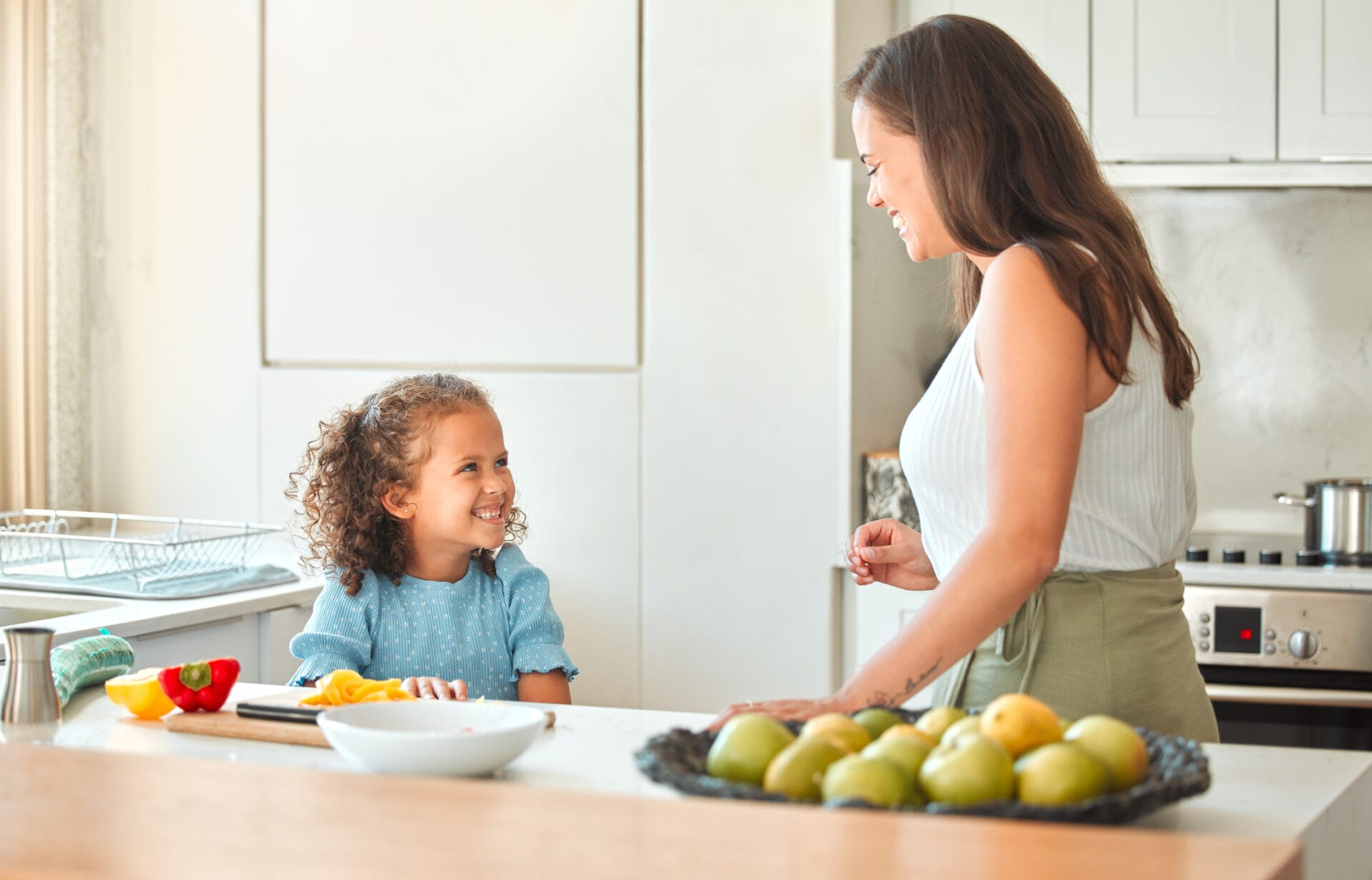







Simple, balanced meals with breakfast, lunch, dinner & snacks the whole family will enjoy.
